Blog

A CFO’s Guide to Vendor Availability Resilience

A CFO’s Guide to Vendor Availability Resilience

Availability Resilience
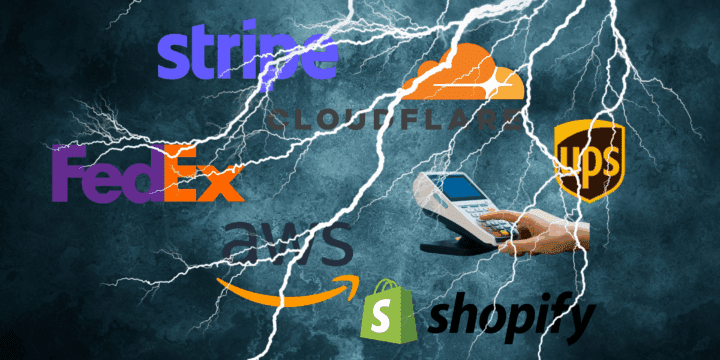
Vendor availability resilience can impact your organization financially within hours. You have invested in data backups, internet redundancy, and cybersecurity. You’ve budgeted for disaster recovery and business continuity. But what happens when an outage isn’t yours? When Shopify, Stripe, or Cloudflare goes down, your internal safeguards don’t matter. Orders freeze, payments fail, inventory data stops syncing, and your employees and customers wait. Most companies assume that their vendors’ uptime is reliable enough to trust. But if your revenue stops the moment a SaaS platform fails, you have more than an IT problem. You are risking a disruption in revenue continuity. The New Revenue Exposure No One Tracks Modern businesses don’t operate on their own systems anymore. They operate on a connected network of vendors: WMS, TMS, POS, accounting platforms, shipping…
Read More
Availability Resilience: Overcoming Hidden Revenue Gaps

Availability Resilience: Overcoming Hidden Revenue Gaps

Availability Resilience
When your network systems go dark, you probably know what to do: Call your IT lead. Switch over to backup servers. Initiate your recovery plan. But what if the outage isn’t onsite? What if Shopify crashes and orders stop syncing? What if Stripe or Clover goes offline and no one can make a payment? What if your WMS or shipping API goes down, halting order production, fulfillment, and delivery notifications? These aren’t theoretical questions. For mid-sized operations, they’re daily dependencies, and when they fail, your revenue stops cold. The Blind Spot in Most Continuity Plans Most companies have a contingency plan for their own infrastructure: redundancies, backup servers, local data recovery. But almost none account for vendor and SaaS outages — those systems outside your sphere of control that make…
Read More
Sector-Specific Cybersecurity: Healthcare, Finance, Education, Government

Sector-Specific Cybersecurity: Healthcare, Finance, Education, Government

Cybersecurity
Cyber threats are becoming more sophisticated, and cybercriminals are leveraging AI to become even more deceptive. The risk of a cyberattack threatens every sector, but no two industries face exactly the same challenges. The cyber risks that healthcare providers face differ from those threatening financial institutions, schools, government agencies, or law firms. To effectively defend against attackers and to ensure compliance and business continuity, it’s critical for organizations to understand the vulnerabilities and pressures unique to their industries. By doing so, they are able to integrate defenses that are tailored to their specific sectors, rather than employing only generic solutions that might not address the specific risks they face. For the healthcare, finance, education, and government industries, we’ll explore real-world cyber threats, ongoing regulatory concerns, and the most effective strategies…
Read More
Managed Service Providers Win with a Trusted Partner

Managed Service Providers Win with a Trusted Partner

Managed IT
Across every sector, managed service providers (MSPs) have become indispensable in supporting the digitization of small and midsize businesses. Yet as technology evolves, rapidly driven by AI and complex threats, the skillsets and resources required to protect clients grow more specialized and more difficult to staff internally. Resilience Through Partnership The narrative has shifted: Cyber defense is no longer a “tools + talent” equation solved simply by hiring to fill a specific need. Even the most capable MSPs face industry-wide obstacles: Recruiting and retaining cybersecurity experts is more difficult and expensive than ever. Compliance and regulatory pressures (e.g., HIPAA, ISO, NIST) raise the stakes with each new client or service. AI adoption creates both new opportunities and new risks, from data leakage in ML pipelines to the rise of shadow…
Read More
Cybersecurity Leadership in the Age of AI: Building Smarter, Safer Systems

Cybersecurity Leadership in the Age of AI: Building Smarter, Safer Systems

Uncategorized
Artificial intelligence has rapidly moved beyond research labs and into everyday business operations, and leadership in every organization is being called upon to build smarter, safer systems. From automated workflows to data-driven decision-making, AI systems now play a vital role in how organizations innovate and compete. Yet with this shift comes an evolving set of cybersecurity challenges. And as technology grows more complex, so does the responsibility to manage it securely and ethically. Organizations are discovering that traditional cybersecurity frameworks, while still essential, fail to fully address the risks introduced by AI and cloud systems. Algorithms can make it difficult to understand the decision-making process, training data can expose sensitive information, and third-party vendors can introduce unseen vulnerabilities. Navigating these risks requires both technical insight and leadership skills capable of…
Read More
Cybersecurity Awareness Month: Staying Ahead in the Age of AI

Cybersecurity Awareness Month: Staying Ahead in the Age of AI

Cybersecurity
Every October, Cybersecurity Awareness Month reminds us that protecting our digital world requires vigilance, strategy, and action. For businesses of all sizes, this year’s theme feels especially urgent: the rise of artificial intelligence is reshaping both the opportunities and the threats we face. While AI is powering innovation across industries, from automating workflows to accelerating decision-making, it also creates new vulnerabilities that cybercriminals are eager to exploit. At Precise Cyber Solutions, we believe that awareness is the first step toward resilience. Here’s what leaders need to know about today’s evolving threat landscape, and how to strengthen defenses in an AI-driven world. The Growing Cybersecurity Challenge The cyber threat environment has never been more complex. Attackers are no longer limited to phishing emails filled with typos or brute-force password attempts. They…
Read More
5 Reasons Law Firms Need a Managed IT Partner

5 Reasons Law Firms Need a Managed IT Partner

Cybersecurity
Law firms handle some of the most sensitive information of any industry: client files, litigation strategies, financial records, and confidential communications. If these invaluable materials are compromised, the consequences could be devastating. Protecting this data isn’t just about compliance; it’s about maintaining client trust, upholding your firm’s reputation, and ensuring your attorneys can do their work without disruption. The real challenge lies in knowing what needs to be protected and then implementing the appropriate safeguards. Cyber threats are constantly evolving. AI has introduced new complexities and risks, from deepfake fraud attempts to the misuse of generative AI tools that could accidentally expose sensitive client information. For these reasons, law firms can no longer rely on basic IT support or in-house teams alone. Partnering with a trusted managed IT provider is…
Read More
Integrating AI into Existing Cybersecurity Protocols

Integrating AI into Existing Cybersecurity Protocols

AI Cybersecurity
Integrating AI into existing cybersecurity protocols requires a strategic and systematic approach. Organizations must carefully consider how AI technologies can enhance their current cybersecurity measures and address potential gaps. This involves evaluating the capabilities of AI systems, identifying areas where AI can add value, and implementing AI-driven solutions in a manner that complement existing protocols. Threat Detection and Response AI systems can analyze vast amounts of data in real time, identifying patterns and anomalies that may indicate the presence of a cyber threat. By integrating AI-driven threat detection systems into existing cybersecurity protocols, organizations can enhance their ability to detect and respond to threats quickly and effectively. AI systems can be used to monitor network traffic, detect unusual behavior, and trigger alerts for further investigation. This proactive approach can help…
Read More
Governing AI Responsibly Amid Widespread Cyber Threats

Governing AI Responsibly Amid Widespread Cyber Threats

Uncategorized
AI adoption is accelerating across government agencies and businesses in virtually every industry. Leaders, understandably, are looking for ways to boost efficiency, strengthen security, and improve decision-making. But while AI holds great promise, most organizations are misusing the technology. In fact, as much as 95% of AI efforts today are wasted investments, and in many cases, they actually increase risk. Instead of rushing to deploy AI throughout your company, the smarter move is to take smaller, more deliberate steps. Start with one use case. Build guardrails around it. Prove it works. Then expand. This is the foundation of responsible AI governance. What AI Governance Really Means AI governance is about more than simply managing technology. An interdisciplinary approach that blends computer science, ethics, law, and cybersecurity is required. AI decisions…
Read More
AI Governance: The Missing Link in Safe AI Adoption

AI Governance: The Missing Link in Safe AI Adoption

AI Integration
Becoming central to business operations, artificial intelligence is no longer just a technical asset; it’s a governance imperative. From compliance blind spots to shadow AI tools, today’s leaders must ask themselves not just what AI can do, but who controls it – and how. At Precise Cyber Solutions, we help organizations confidently embrace AI by securing systems, data, and people behind the scenes. While AI is powerful, it's not inherently secure. The question isn't whether your organization should adopt AI. The matter is more about how to do so safely. AI Without Governance Is a Security Gap AI doesn't simply enhance business proficiency; AI also expands your digital footprint and creates new attack surfaces. The risks aren’t theoretical, either. They’re real and they’re multiplying: Data exposure: AI models often rely…
Read More