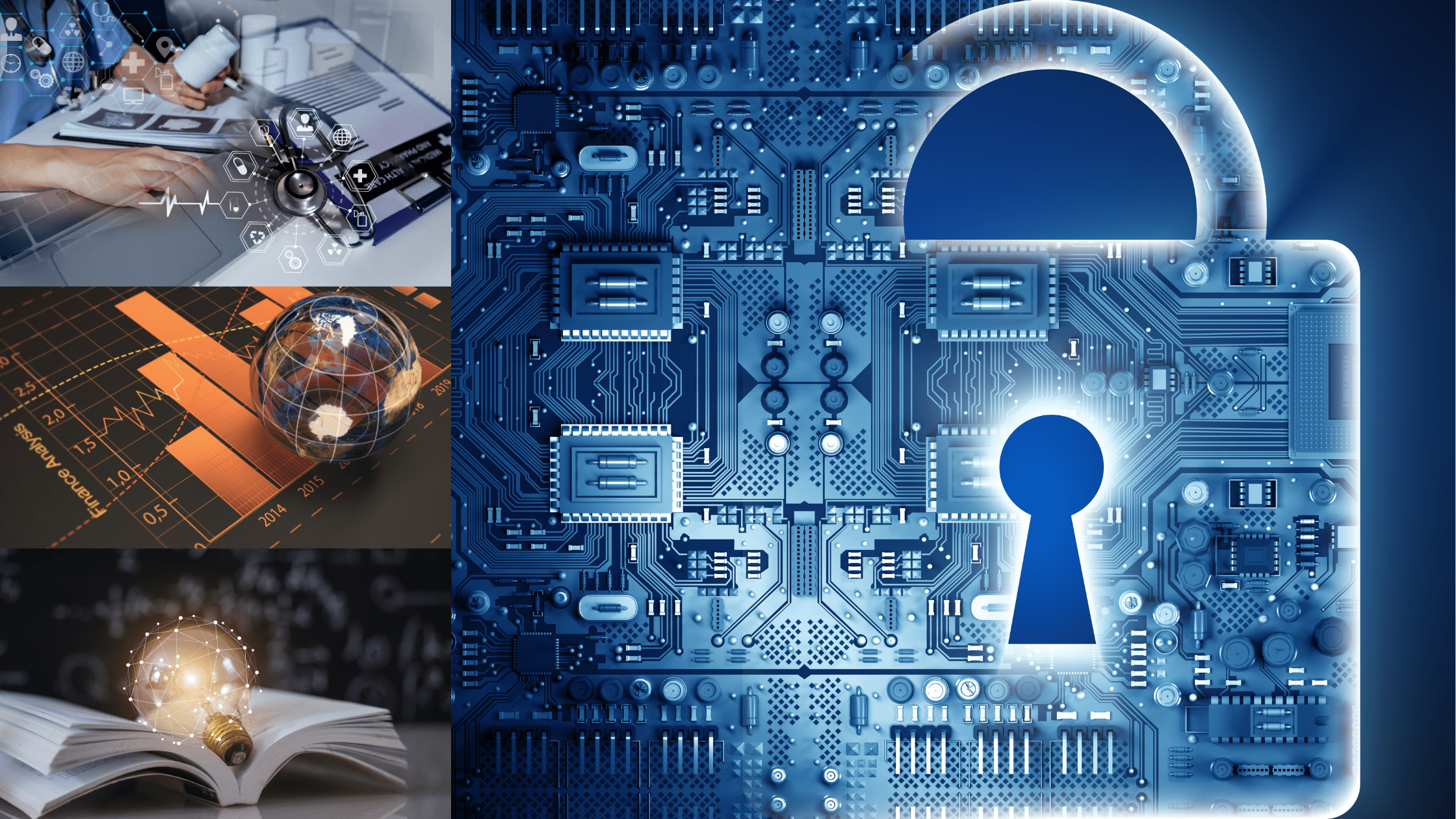
Cyber threats are becoming more sophisticated, and cybercriminals are leveraging AI to become even more deceptive. The risk of a cyberattack threatens every sector, but no two industries face exactly the same challenges. The cyber risks that healthcare providers face differ from those threatening financial institutions, schools, government agencies, or law firms. To effectively defend against attackers and to ensure compliance and business continuity, it’s critical for organizations to understand the vulnerabilities and pressures unique to their industries. By doing so, they are able to integrate defenses that are tailored to their specific sectors, rather than employing only generic solutions that might not address the specific risks they face.
For the healthcare, finance, education, and government industries, we’ll explore real-world cyber threats, ongoing regulatory concerns, and the most effective strategies for building resilience. Whether you’re responsible for sensitive patient data, financial transactions, academic records, or public services, knowing where you’re exposed and how to protect your assets can make all the difference.
Healthcare: Protecting Lives and Data
Healthcare organizations, from hospitals and clinics to insurers and medical research labs, are prime targets for cybercriminals. Ransomware attacks are especially prevalent, with criminals seeking to extort payments by encrypting patient records or disrupting services. For example, in 2023, several major hospital networks experienced weeks-long outages because their systems were held hostage, jeopardizing not just data, but patient safety.
In 2025, two major breaches occurred: Blue Shield of California leaked sensitive information of 4.7 million customers to Google, and Yale New Haven Health experienced a data breach impacting 5.5 million patients, which will cost the organization at least $18 million in a settlement. The sensitive nature of medical data, coupled with the need for always-available patient care systems, clearly creates a high-stakes environment for providers.
Key Threats in the Healthcare Sector:
- Ransomware and data breaches: Attackers target electronic health record (EHR) systems, sometimes exploiting outdated software or unpatched vulnerabilities.
- Phishing and social engineering: Healthcare staff, often hurried, may be tricked by convincing messages or fake login pages.
- Compliance risks: Regulations, such as HIPAA, impose strict data protection requirements, making any breach a costly affair.
Strategies for Defense in Healthcare:
- Layered security controls: Multi-factor authentication, endpoint encryption, and network segmentation make it harder for attackers to move laterally.
- Continuous staff training: Cybersecurity awareness programs tailored to healthcare personnel reduce the likelihood of successful phishing attempts.
- Incident response playbooks: Up-to-date plans and regular drills ensure rapid containment and communication in a crisis.
- Third-party risk management: Vetting service providers and software vendors helps close gaps often exploited by attackers.
Finance: Safeguarding Reputation and Capital
Financial institutions contend with the dual challenge of protecting vast sums of money and highly valuable customer data. Banking fraud, identity theft, and regulatory non-compliance can not only result in direct financial loss but also severely damage an organization’s reputation. Attackers are leveraging advanced techniques, such as business email compromise and credential stuffing, affecting both employees and customers. TransUnion, a credit monitoring bureau, experienced a breach in July 2025 that impacted 4.4 million customers, compromising sensitive data that included names and social security numbers.
Key Threats in the Finance Sector:
- Social engineering and phishing: Targeted spear phishing attempts use detailed information to trick bank staff and clients.
- Fraud and credential theft: Attackers may exploit software flaws and weaknesses in authentication systems.
- Regulatory demands: Financial firms must adhere to a number of compliance regulations, including PCI-DSS, SOX, and GDPR. Noncompliance can result in heavy fines.
Strategies for Defense in Finance:
- Advanced threat analytics: AI-driven fraud detection systems can identify suspicious patterns in real time.
- Robust access controls: Utilize strict privilege management for sensitive financial databases and systems.
- Regular penetration testing: Simulated attacks reveal vulnerabilities before they can be exploited.
- Customer engagement: Education campaigns minimize risk and warn customers about the latest scams.
Education: Safeguarding Academic Integrity and Student Privacy
Universities, colleges, and K-12 districts have become frequent targets for cybercriminals. In 2023, Los Angeles United School District experienced a data breach that compromised “over 26 million records with student information, more than 24,000 teacher records, and around 500 containing staff information,” according to Bleeping Computer. And the PowerSchool data breach remains one of the most noteworthy examples of how a small security misstep (lack of MFA) can have costly and damaging results. Educational systems store vast amounts of personal data, including financial, medical, and academic records. Yet, with limited IT budgets and the task of maintaining a mix of device types, defending these systems is complex.
Key Threats to the Education Sector:
- Data breaches: Unauthorized access to student or staff personal data
- DDoS attacks: Disruption of online learning platforms or school networks
- Device security gaps: Unpatched or unmanaged tablets, laptops, and phones
Strategies for Defense in Education:
- Tokenization: Anonymize data before sharing it with third parties.
- Patch management: Ensure timely updates for all devices and applications, to close security gaps.
- Awareness training: Promote cyber hygiene among students and faculty.
- Multi-actor authentication: Require MFA for all students, staff, and third-party vendors accessing any part of the school network.
Government: Securing Public Trust and Critical Infrastructure
Government agencies are attractive targets for both criminal and nation-state actors. Successful attacks can jeopardize everything from vital public services to national security. The introduction of new technologies and remote work has dramatically expanded the attack surface, making continuous vigilance essential. In recent years, major attacks have occurred that threaten the security and safety of the U.S. government, including the Department of Treasury.
Key Threats to the Government Sector:
- Nation-state cyber attacks: Espionage, sabotage, or disruption by advanced adversaries
- Critical infrastructure attacks: Targeting utilities, transportation, or emergency systems
- Compliance risks: Noncompliance with mandates, such as NIST, FISMA, and more
Strategies for Defense in Government Agencies:
- Zero-trust architecture: Assume that threats may already exist inside the network; restrict access dynamically based on context.
- Continuous security monitoring: Search for new threats and vulnerabilities 24/7.
- Tabletop exercises: Practice disaster recovery and incident response across departments.
- Strong governance and policies: Regularly review and enforce information security policies.
The best defenses are never generic. Understanding and addressing sector-specific cyber risks allows you to invest in tailored solutions needed to secure your industry. Precise Cyber Solutions combines advanced AI tooling, domain expertise, and proven governance to deliver a full spectrum of cybersecurity capabilities. Whether you’re facing evolving compliance requirements, complex cloud architectures, or talent gaps, we tailor our services to meet your needs. Learn more.